
EV Charging Guide
EV LANGUAGE
- EV - Electric Vehicle
- IEC62196 - Type 2 Plug, charging usually at 16 or 32amp Single or 3 Phase
- BEV - Battery Powered Electric Vehicle
- CHAdeMO - DC Charging Plug used for Fast Charging
- PEV - Plug-in Electric Vehicle
- Slow Charge - Usually 10amp or 16amp (3.6kW) charging
- PHEV - Plug-in Hybrid Electric Vehicle
- Fast Charging - Direct Current (DC) Charging 50kW or above
- ICE - Internal Combustion Engine eg: petrol or diesel
- kW - Kilowatt, a unit for measuring power
- EVSE - Electric Vehicle Supply Equipment
- kWh - Kilowatt hour, a unit for measuring energy
- J1772 - Type 1 Plug, charging usually at 16amp or 32amp, Single Phase
- NEV - New Energy Vehicle (EV, PHEV, HEV)
- FSD - Full Self Driving
- AV - AV
AC EV CHARGING PLUGS
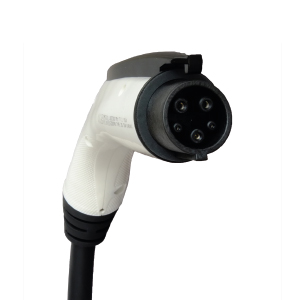
TYPE 1
Also known as: J1772, SAE J1772
This plug is used for single phase charging.
240V AC up to 32amp 7.6kW.
It is used as the standard plug type for Japan and North America
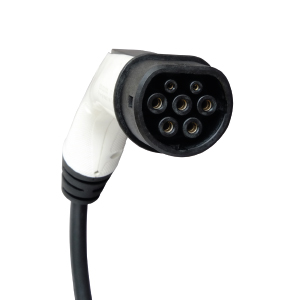
TYPE 2
Also known as: IEC 62196, Mennekes
This plug is used for single and 3 phase charging.
230V AC up to 32amp 7.6kW, Single Phase.
415V AC up to 32amp 22kW, 3 Phase.
It is used as the standard plug type in Europe and has become the standard type of plug used in Australia
DC EV CHARGING PLUGS
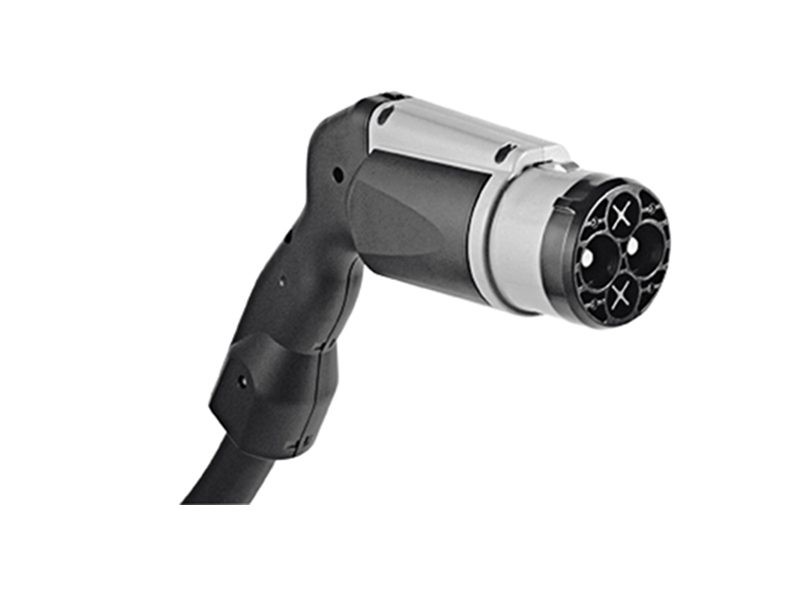
CHAdeMO
Abbreviated from CHArge de MOve
This plug is used for DC rapid charging only. It is used by Japanese car manufactures
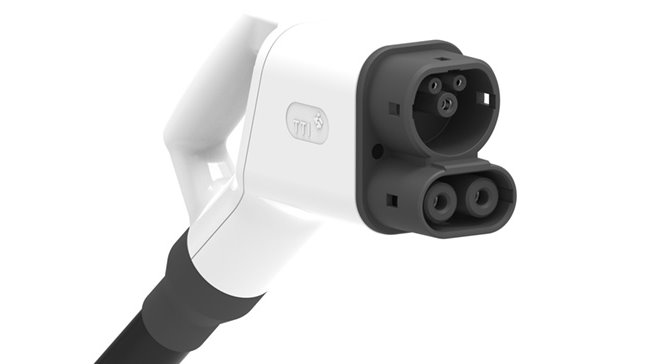
CCS Combo
Combined Charging System also called Combo Coupler
This plug is a combination of the type 2 plug with 2 extra contacts for DC rapid charging.
TYPES OF EV CHARGERS
The level 1 charger is small and portable, so you can plug it into commonly found power point either at home or at the workplace. The power outlet you wish to plug into must be protected by a residual current device (RCD, safety switch) for protection against electric shock in fault conditions. These are designed to be used as a backup charger and not really designed for everyday use.
Approximate charging speed: 10km added per hour.
Charges from a standard home socket at 1.8 to 2.4 kW. This basically means 1.8kW will be added to your car’s battery every hour. In an EV battery, 1kW of charge equals a range of 6km. So, a Level 1 charger will give your vehicle 10km of range each hour it’s plugged in.
If your Level 1 EV charger has an interchangeable plug, this may mean it can charge at higher speeds. Every portable EV charger comes with a 10A regular plug, but a select few will have a 15A plug that allows 3 – 3.4kW charge rate (18km range per hour).
Charging is supplied via a dedicated plug hard wired back to a switchboard using specific cable capable of carrying higher currents (Amps) and voltages, charging your vehicle in a shorter time than level 1 charging. By using this type of charger it will give you more kilometres per hour of charge which increase the usability of your vehicle and saves you time in waiting for the battery to charge. the level 2 chargers cost more to purchase and have installed, but the advantages make it a worthwhile investment.
Approximate charging speed: 40km added per hour (single-phase) or 130km per hour (three-phase).
A Level 2, single-phase, 7kW charger, will add up to 40km of range each hour. A three-phase, 22kW charger, adds up to 130km of range each hour. Check your electric vehicle specs, because some cannot invert the higher AC power quickly enough.
Fast charging from dedicated DC supply equipment. These are not what you would install in domestic situation due to the cost of the supply equipment and the demand on the electrical supply to the property. They are most suited for side of road service centres and fleet charging where there is a high turnover of vehicles charging or charging time is critical to business operation.
Approximate charging speed: 200 – 1000km added per hour.
Level 3 chargers offer an output of 50kW to 350 kW. They can cost upwards of $55,000 to install, need a large power supply and are ideal to top up your EV on long trips.
The Tesla Supercharger network uses chargers with a maximum output of 150kW, which can provide 180km of range in under 15 minutes. This network is commonly seen along popular travel routes and at major shopping centres.
Is it Worth Installing Level 2 Charging in Your Home?
A Level 2 charger can cost upwards of $2,000 to install. But, for the price, you can enjoy a significantly lower charge time than with the Level 1. You get a higher amount of kilometres for every hour of charge, saving you time and increasing the usability of your vehicle. So, yes, the Level 2 is well worth installing as your home EV charger.
Should You Choose a Single-Phase or Three-Phase Charger?
If you have one EV, a single-phase, 7kW should suffice, unless you need your car charged up quickly every day. Plus, the majority of EVs can only handle an AC power of around 11kW, which is half the capability of three-phase chargers.
For those with two or more electric vehicles that get used frequently, a three-phase charger is useful. They are also recommended if you have a solar system that is 10Kw or larger and you plan on adding large amounts of solar energy into your EV during sunny periods.
Tips for Using Level 2 or Level 3 Public Chargers
Every public charging station you come across will vary slightly. Some will offer Level 2 speeds and others, the Level 3 super-fast charge. Some Level 2 public charging stations require you to bring your own cable that is Type 2 (32A, 250v AC).
If you use a specific charging network, always view the network website before you start your journey, to check that charging stations are in service and if you’ll need to take your own charging cable.
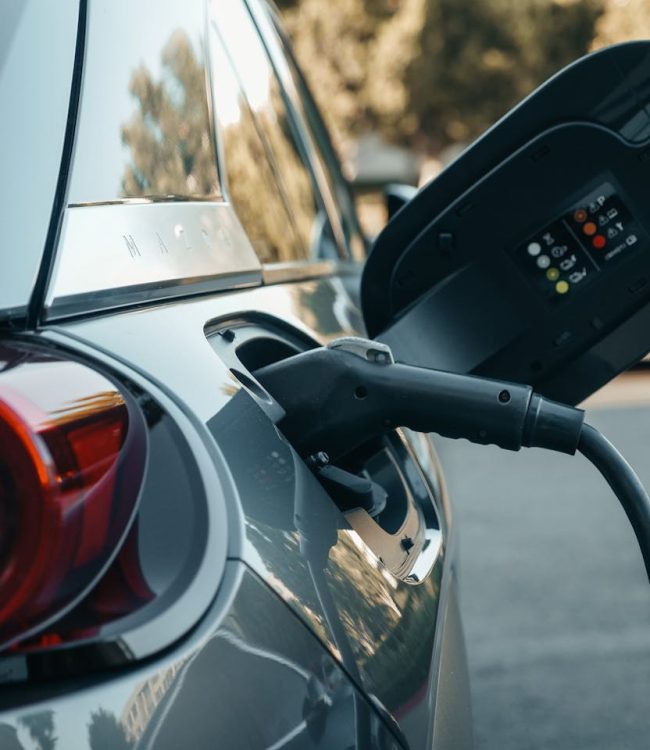
AC vs DC EV CHARGING
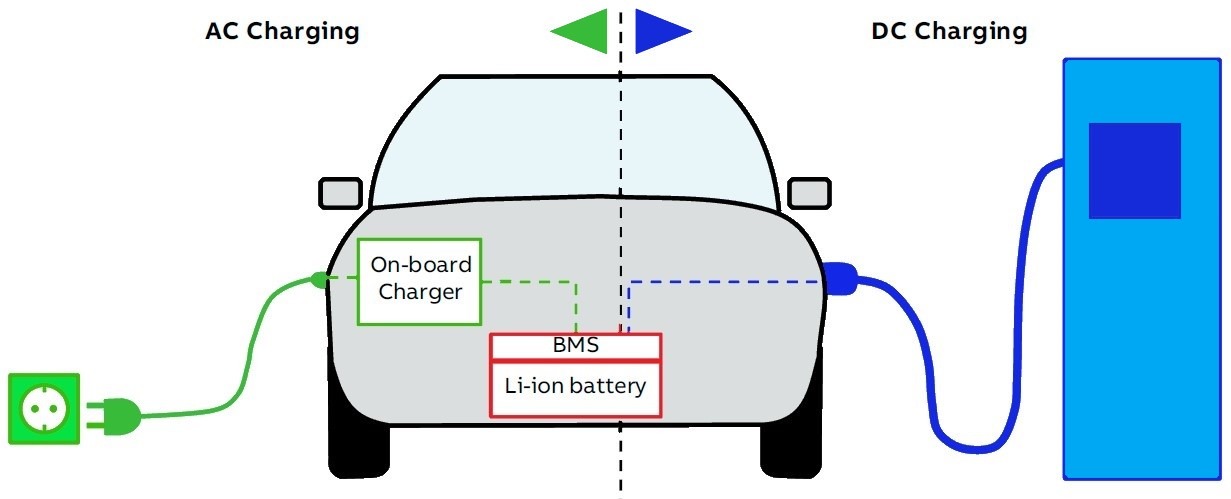
Difference Between AC and DC EV Charging
AC charging is achieved via a portable or hardwired EV charger that delivers an alternating current of between 3.6 – 22kW to the vehicle onboard battery management system. This slows the rate of charge as it needs to convert the AC power to DC power. Battery electrical energy is stored in a DC state.
DC charging is from public or semi-public chargers delivering between 23 – 175kW of DC power directly to the vehicle battery.
The DC power bypasses the vehicle onboard inverter making for a much quicker charge time. DC voltages range between 500 – 900VDC, which also impacts charging times. Not all electric vehicles can accept a high voltage with all EV’s stopping fast DC charging at 80% and reverting to a slower charge rate.
Home EV Charging
The majority of electric car charging is expected to be carried out at home due to the convenience,
Apartment & Hotel
EV charging stations are a practical and cost effective solution for apartment owners and tenants.
Strata and Body Corporate
Our team will take care to provide the best, cost-effective solution to future-proof your building.
EV Fleet Charging
We provide tailored fleet management solutions, with software that you can either self-manage or have expertly handled on your behalf.
Public EV Charging Stations
We specialise in delivering high-quality AC and DC fast charger installations designed for an ergonomic user experience.
Workplace & Commercial
Installing workplace EV charger systems helps to look after the needs of your employees and customers.
CHARGING TIMES
Charging times will vary from vehicle to vehicle due to contributing factors such as, the size of the vehicle’s on-board charger and the size of the vehicle’s battery to be charged. The kW level you select will have an effect on your charging times.
- Level 1, 3.7kW AC portable charger.
- Level 2, 7kW – 22kW AC
- Level 3, 24kW – 175 DC
| Kilowatts | Voltage AC/DC | Amperage | Phases | Time 60kW/h Battery |
|---|---|---|---|---|
| 3.7 kw | AC | 16 amps | 1 | 16 hrs |
| 7.2 kW | AC | 32 amps | 1 | 8 hrs |
| 11 kW | AC | 16 amps | 3 | 6 hrs |
| 22 kW | AC | 32 amps | 3 | 3 hrs |
| 24 kW | DC | 40 amps | 3 | 2.6 hrs |
| 50 kW | DC | 80 amps | 3 | 80 min |
| 175 kW | DC | 310 amps | 3 | 23 min |
CHARGING COST
One of the most important factors when purchasing a new vehicle is the running costs. The great news is the running costs for electric vehicles is significantly lower than petrol/diesel vehicles in fuel and servicing costs.
This is how to work out your costs for fuelling your vehicle.
You first need to find out what you pay per kWh for your electricity, you will find this on your electricity bill, likely to be about $0.29/kWh. Now you need to look at the battery size of the electric vehicle you intend to charge. For this example, we will choose the Tesla Model Y Rear-Wheel Drive with a battery size of 60kWh and a claimed range of 455km (WLTP).
The cost to charge a Tesla Model Y is 0.29 x 60 = $17.40
From this equation, we can work out the cost per km by dividing the charging cost of $17.40 by the range of 455km, 17.40 / 455 = $0.0382 per km.
0.0382 x 100 = $3.82 per 100km.
You can use this example for any electric vehicle to determine your charging and per kilometre travel cost.
Load Management
EV charger load management is the solution to being able to charge multiple EVs with a limited electrical supply. This innovative concept revolves around the intelligent control and distribution of electrical power to multiple EV chargers within a network. By optimising the allocation of available power resources, load management ensures that charging stations can operate seamlessly, avoiding overloads and grid strain.